Master in Economics
Build expertise in economics and empirical methods to understand today’s major challenges and contribute to shaping the world of tomorrow
ECTS Credits 90
Start of Studies Autumn / Spring
Duration 3-4 Semester
Course Languages EN - FR - DE
Bilingual Option yes
Trilingual Option yes
Programme Highlights
This Master prepares you to understand, analyse and assess the major economic and political decisions of our time. Through a curriculum focused on the digital economy, you will develop data-driven analytical tools to examine public policies, markets and sustainability challenges. With a broad range of courses, diverse specialisations and access to European double degrees, you can tailor your studies at the heart of today’s key economic debates.
Study Plan
Standard MA
|
Assessments |
ECTS |
|---|---|
| Mandatory courses | 12 |
| Advanced Microeconomics | |
| Econometric Methods and Applications | |
| Elective courses | 58 |
| Total coursework | 70 |
| Master Thesis | 20 |
| TOTAL minimum | 90 |
MA with option
|
Assessments |
ECTS |
|---|---|
| Mandatory courses | 12 |
| Advanced Microeconomics | |
| Econometric Methods and Applications | |
| Elective courses | 31 |
| Option | |
| One option to be selected from the list below | 27 |
|
Public Economics and Policy |
|
|
Sustainable Development and Social Responsibility |
|
|
Quantitative Economics |
|
| Business Economics | |
| Total Coursework | 70 |
| Master Thesis | 20 |
| TOTAL minimum | 90 |
Further Info
Elective courses may be taken in Economics and up to 15 ECTS may be selected from other Faculty courses.
Choosing an option remains entirely optional.
120 ECTS Master
For broader horizons, add a 30 ECTS Minor from another discipline to reach a 120 ECTS Master’s degree, provided you meet the admission requirements for that Minor.
Downloads
Study Plan Cours and TimetablesBrochure (FR)Brochure (DE) Regulation on the award of the Master
Options
Public Economics and Policy
The option provides students with an advanced background in analysing public decision-making and public policies. It offers courses with a wide range of topics with both a Swiss and an international perspective on tax and fiscal policies, social and economic policies, the economic analysis of politics, etc. This option prepares students to work in international organisations, in the public administration at the federal, cantonal or municipal level.
Sustainable Development and Social Responsibility
The option offers a specialisation in topical issues, namely the implementation of a sustainable and fair economic model. Thanks to multi-disciplinary courses, students will tackle themes related to the development in the poorest countries, inequality and environment protection. The teaching includes primarily economics, but also philosophy, management, law and environmental sciences. The option therefore offers complete and original training on the theme of sustainable development with a multiplicity of approaches.
Quantitative Economics
The option focusses on quantitative methods for analysing data sets based on statistics, econometrics, machine learning (artificial intelligence), and network science. The courses discuss the methods' theoretical properties as well as their practical application to economic questions (e.g. in the fields of public policies, finance, development, and education) using software packages such as R, Stata and Python. The option provides state-of-the-art training in data analytics and empirical economics, which are key domains in a digitised economy.
Business Economics
The option allows students to specialise in microeconomics, at the intersection of economics and management. Students acquire an understanding of strategic decisions of companies from a management perspective, as well as of the strategic interaction of firms in markets from an economic perspective. They learn to analyse the behaviour of organisations, strategic actors within organisations, as well as of the behaviour of consumers. While the management perspective focuses on the objectives of the company, the economic perspective prioritises questions of social welfare and regulation. The option provides an excellent qualification for work with a focus on strategy and analytics in companies, as well as for positions in public institutions with a focus on markets, competition and regulation.
Admission Requirements
→ Bachelor from a Swiss university in Economics, or including at least 60 ECTS in the field: direct admission
→ Bachelor from a Swiss University of Applied Sciences (HES) in Business Administration: admission with a standard additional programme of 30 ECTS
→ All other applications are assessed individually. Admission is not automatic for international applicants and GMAT results are required for degrees obtained outside the EU or EFTA.
If admitted, the Faculty may require up to 60 ECTS of additional Bachelor's-level courses.
→Degrees older than 8 years are generally not eligible
Students enrolled at the University of Fribourg must apply via the MyUnifr portal.
Language of study
Three languages, a distinctive asset: study mainly in English, with a choice of courses in French and German. Tailor your path and earn a bilingual or trilingual mention on your degree to stand out in the global job market.
Mobility
An exceptional opportunity to shape your Master’s and strengthen your academic journey by spending one or two semesters abroad. Experience new cultures, expand your international network, and boost your CV with all credits obtained fully recognised.
Recommended semester : from the 2nd semester onwards
Mobility mention : awarded from 30 validated ECTS
Double Degree
Master in Economics, Specialisation Public Economics and Public Finance, University of Fribourg with
Université de Rennes 1 or Università degli Studi del Piemonte Orientale
Programme Highlights
Boost your career with a European double degree!
Join the Specialisation in Public Economics and Public Finance and study at the University of Fribourg plus one of our partners: Université de Rennes 1 (France) or Università del Piemonte Orientale (UPO, Italy). Spend a semester abroad, take courses at both universities, and complete a jointly supervised Master’s thesis. You will graduate with two official diplomas, one from each country, and might gain access to PhD programmes from both institutions. Broaden your expertise, your network, and your European opportunities!
In Fribourg, the study plan for the specialisation requires 50% of ECTS credits to be taken in Public Economics and Public Finance, 25% in Quantitative Methods and 25% in other domains of Economics. The Master’s thesis must address a topic related to public economics and public policy, broadly defined.
Study Plan Double Degree
| Assessments at Fribourg and Partner University | ECTS |
|---|---|
|
Public Economics and Public Finance Including courses in the option Public Economics and Policy, min 27 |
min. 35 |
|
Quantitative Methods |
min. 15 |
| Including the mandatory courses | |
| Advanced Microeconomics | |
| Econometric Methods and Applications | |
| Elective courses in Economics | max. 20 |
| Total coursework | 70 |
| Master Thesis (or Master thesis 14 + internship 6 at UPO) | 20 |
| TOTAL minimum | 90 |
Further Info
The 70 ECTS in courses selected by the student must be approved by the academic advisor and the SES Dean’s Office on a Learning Agreement before the exchange semester.
The Master Thesis is written in English and co-supervised by professors from the two partner universities.
Languages of study
Study mainly in English, with a choice of courses in French and German
Application
Applications must be sent by 31 January to mobility-delegate-ses@unifr.ch and must include a CV, all transcripts of BA and eventually MA in Economics marks, a letter of motivation.
The Admissions Delegate will decide, in consultation with the double degree academic advisor, after the publication of the MA marks in February for a start at the partner university the following Autumn Semester.
Career Opportunities
Economics, public policy and data-driven analysis: this Master opens the door to a wide range of careers in both the public and private sectors. Pursue opportunities in public administration, international organisations, NGOs, media, business, consulting or research, and contribute to addressing the economic challenges facing societies and organisations today.
Testimonials

Le Master en Économie politique m’a offert une formation à la fois exigeante et inspirante. L’engagement et la passion des Professeurs ont nourri ma curiosité et renforcé ma rigueur d’analyse. Cette expérience a profondément façonné ma manière de comprendre et d’aborder les enjeux économiques. Bryan Spahr - « Cards & Payments Specialist » chez PostFinance
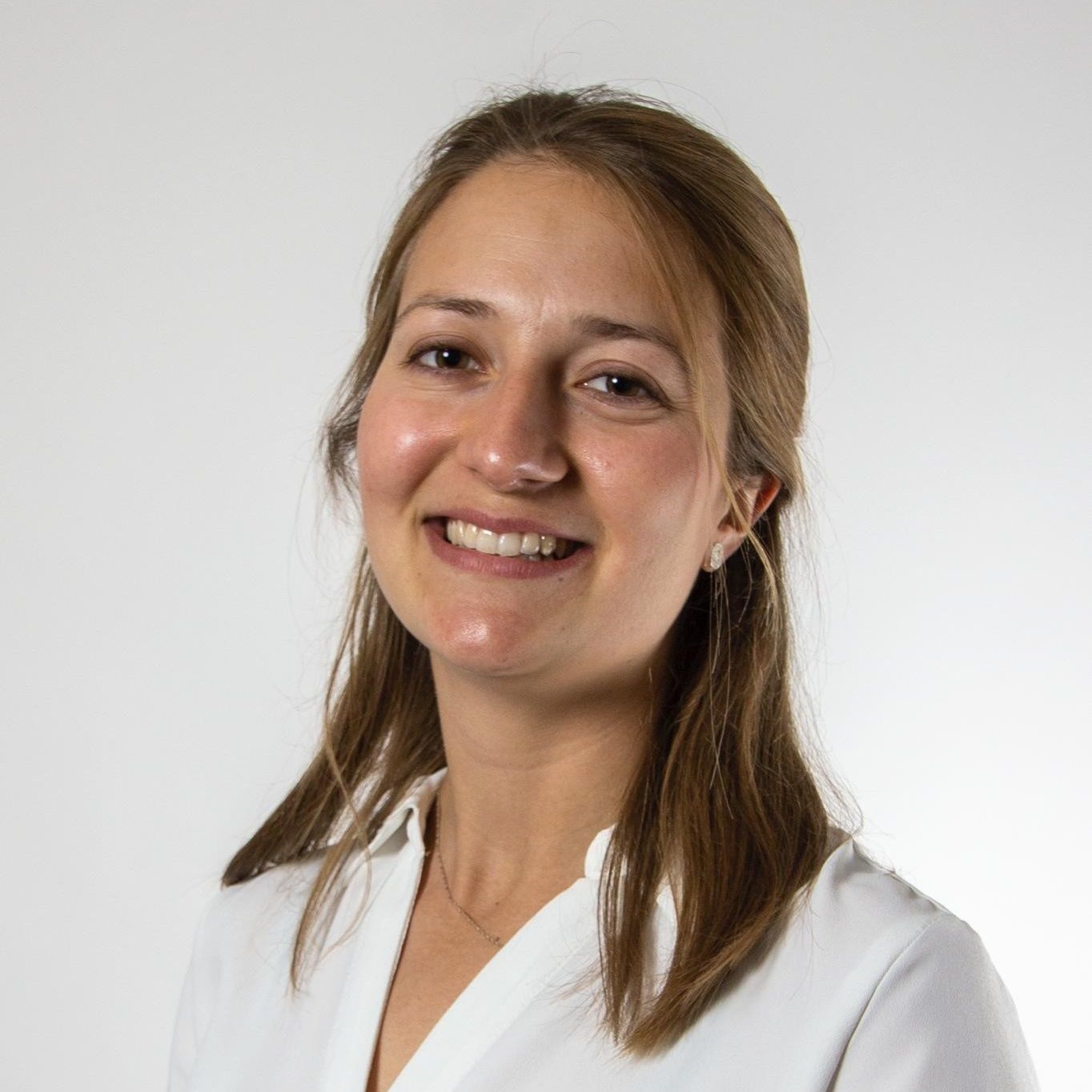
Mein Masterstudium in Volkswirtschaftslehre war eine sehr bereichernde Zeit. Auch wenn ich heute nicht in einem klassischen VWL-Beruf tätig bin, profitiere ich täglich von den im Studium erworbenen analytischen Fähigkeiten und dem vertieften Verständnis für wirtschaftliche und politische Zusammenhänge. Olivia Gmür - Staatssekretariat für Migration (Direktionsbereich Bundesasylzentren)
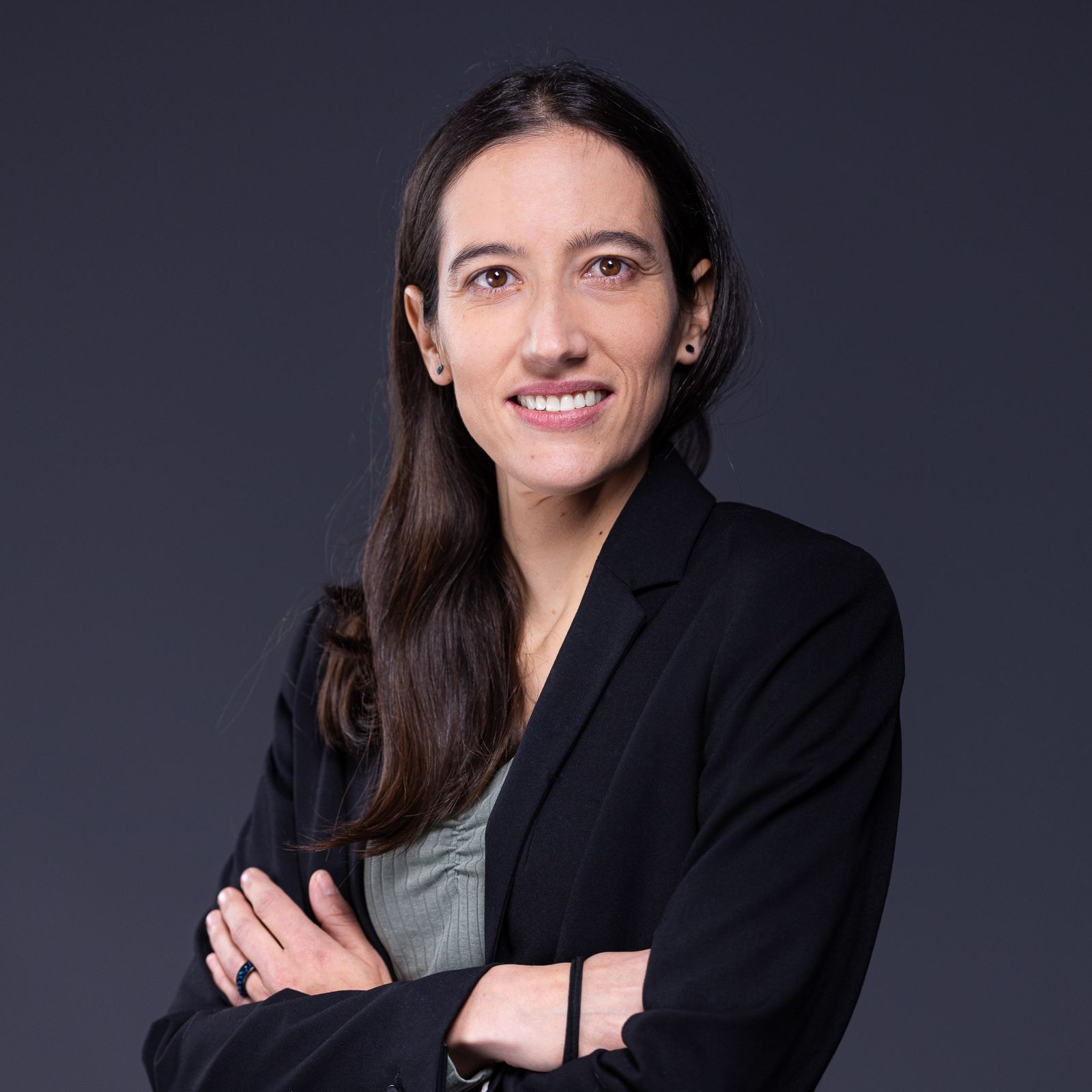
Le Master en économie politique m’a permis d’acquérir des connaissances théoriques et empiriques solides et de développer ma capacité à analyser des problématiques complexes, tout en profitant d’un enseignement en trois langues. La flexibilité du programme m’a offert les conditions idéales pour concilier mes études avec ma vie de maman. Giada Amelia Valsangiacomo - Déléguée cantonale à l’approvisionnement économique du pays, Etat de Fribourg
Academic Advising - Information
Faculty of Management, Economics and Social Sciences
Bd de Pérolles 90
CH-1700 Fribourg
+41 (0) 26 300 82 00
decanat-ses@unifr.ch