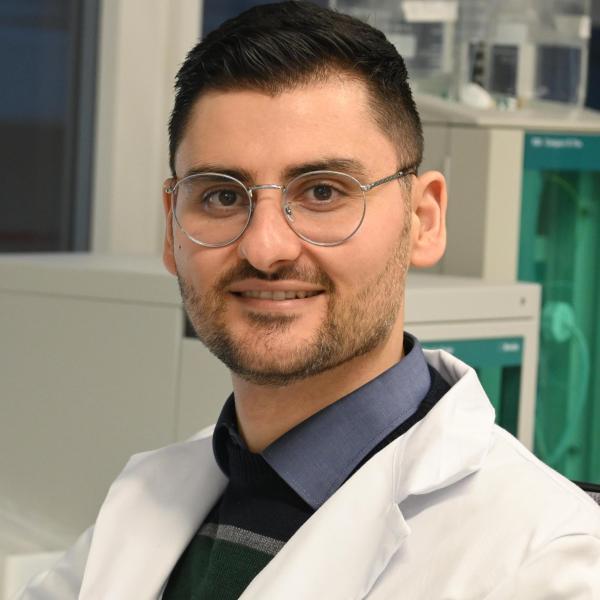
ZUHRA Karim
Professor
In our group we are interested in understanding how small, reactive molecules, including endogenously produced cyanide, regulate cellular energy metabolism and redox homeostasis. Our goal is to uncover the molecular and metabolic pathways that control mitochondrial function and cellular signaling, and to leverage this knowledge to develop targeted strategies to restore or modulate these pathways in disease contexts.
CYANIDE AND ENERGY METABOLISM
Cyanide is traditionally viewed as a toxic molecule, yet recent discoveries have revealed that cells produce cyanide at low physiological levels, where it acts as a signaling molecule or gasotransmitter. In our lab, we study how endogenous cyanide influences mitochondrial function, bioenergetics, and redox balance. We are particularly interested in the enzymatic pathways that generate and degrade cyanide, as well as its molecular targets, including protein modifications such as S-cyanylation. By understanding how cyanide integrates with cellular metabolism, we aim to elucidate its roles in both normal physiology and disease.
REACTIVE METABOLITES AND CELLULAR REDOX CONTROL
Our research also explores other small, diffusible metabolites, such as hydrogen sulfide and reactive oxygen species, which act as regulators of cellular signaling and energy metabolism. These reactive molecules readily cross membranes and modulate key processes in health and disease. We investigate how dysregulation of these pathways contributes to pathological states, including cancer and metabolic disorders, where altered metabolite production disrupts mitochondrial function and signaling networks.
TRANSLATING METABOLIC INSIGHTS INTO THERAPEUTIC STRATEGIES
By combining cell metabolism, redox biology, and pharmacology, our group aims to identify metabolic vulnerabilities and design interventions to restore cellular bioenergetics and redox homeostasis. Ultimately, our research seeks to translate fundamental insights into novel strategies for modulating reactive metabolite pathways in disease, with potential applications in cancer, metabolic dysfunction, and beyond.
Cyanide is an endogenous stimulator of endothelial cell proliferation, migration and differentiation.
Kieronska-Rudek A and Petrosino M and Zuhra K and Szabo C, Experimental biology and medicine (Maywood, N.J.) (2026)
| Journal article
Cyanide overproduction impairs cellular bioenergetics in Down syndrome.
Petrosino M and Zuhra K and Kieronska-Rudek A and Janickova L and Bremer O and Khalaf M and Logue BA and Szabo C, Neurotherapeutics : the journal of the American Society for Experimental NeuroTherapeutics (2025)
| Journal article
Regulation of mammalian cellular metabolism by endogenous cyanide production.
Zuhra K and Petrosino M and Janickova L and Petric J and Ascenção K and Vignane T and Khalaf M and Philipp TM and Ravani S and Anand A and Martins V and Santos S and Erdemir S and Szabo C, Nature metabolism (2025)
| Journal article
Physiological concentrations of cyanide stimulate mitochondrial Complex IV and enhance cellular bioenergetics

Randi, Elisa B and Zuhra, Karim and Pecze, Laszlo and Panagaki, Theodora and Szabo, Csaba, Proceedings of the National Academy of Sciences (2021)
| Journal article