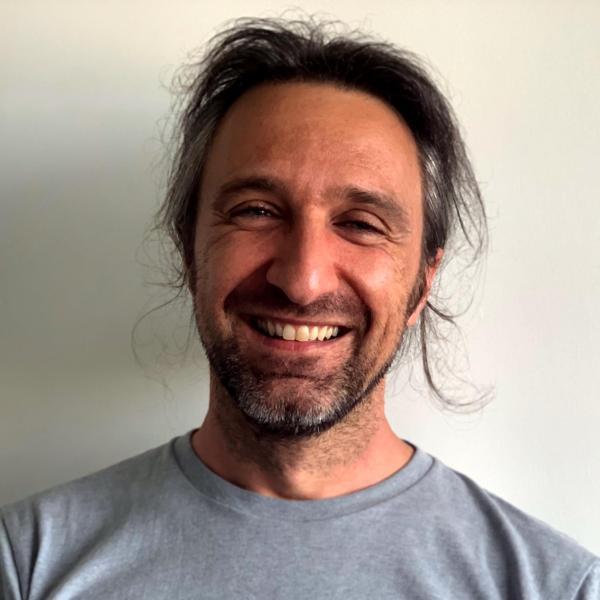
Stefan Salentinig
Department Head, Professor
PER 10 - 427
+41 26 300 8794
Stefan Salentinig is Full Professor of Physical Chemistry at the University of Fribourg, where
he leads the Biocolloids Laboratory and serves as President of the Department of Chemistry.
He is also President of the Swiss Society for Surfaces and Interfaces (SAOG) and Founding
Director of the Food Research and Innovation Center. His research combines colloid and
interface science, soft matter, and advanced scattering techniques to understand and engineer biological and bio-inspired materials for food, health, and sustainable materials applications. He obtained his PhD in Physical Chemistry from the University of Graz, Austria, in 2010, specializing in colloids and scattering methods. He subsequently moved to Australia to join the Commonwealth Scientific and Industrial Research Organisation (CSIRO) as a scientist
working on functional nanomaterials. In 2013, he was appointed Lecturer at Monash University in Melbourne, where he conducted research on nanoscale drug delivery systems in close collaboration with the Australian Nuclear Science and Technology Organisation
(ANSTO). In 2015, he joined Empa in St. Gallen, Switzerland, as Group Leader in Functional Materials before taking up his current position at the University of Fribourg in 2019.
His research integrates advanced X-ray scattering and diffraction techniques to elucidate the
structure and function of biological and bio-inspired materials across multiple length scales,
from the atomic to the macroscopic. This work is supported by an extensive network of
national and international.
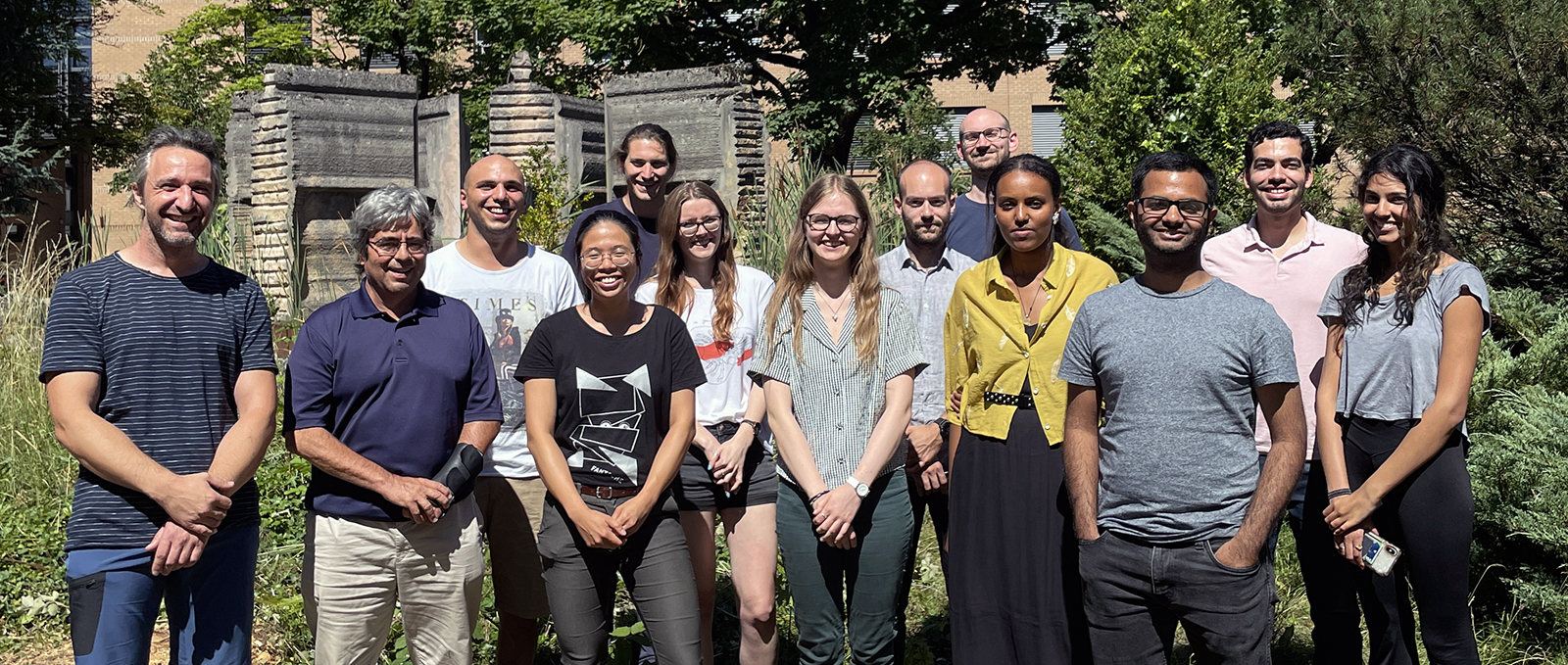
The Biocolloids Laboratory studies the physical chemistry of biological and bio-inspired materials. We combine concepts from colloid and interface science, soft matter, and advanced structural characterization to understand how molecular interactions, self-assembly, and confinement determine material structure and function. Nature provides a rich source of inspiration. We investigate systems ranging from milk and lipid assemblies to antimicrobial interfaces, polymers under nanoconfinement, and espresso coffee. Although these materials appear very different, they are governed by common physical principles. Understanding these principles allows us to design new functional materials for applications in food, health, and sustainability. Our research combines fundamental science with advanced experimental methods. We integrate synchrotron X-ray scattering and diffraction with spectroscopy, microscopy, and complementary techniques to follow structural changes from the molecular to the cellular scale, often in real time. Our goal is to uncover the relationships between structure, dynamics, and function, and to translate these insights into the design of next-generation functional materials.
Department Head, Professor
PER 10 - 427
+41 26 300 8794