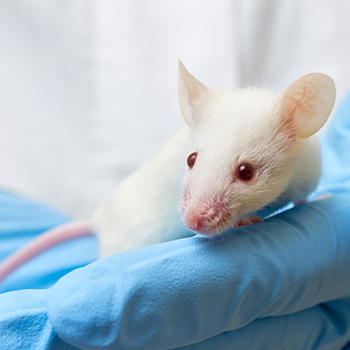
Ethics in Animal Experimentation
Examine questions of justification, harm and benefit, uncertainty and responsibility in the planning, review and conduct of animal research.
Professionals working with animals or in environmental governance often face decisions for which scientific evidence, professional guidance and the law are necessary – but they are not sufficient. Should treatment continue when benefits are uncertain? When is an animal experiment ethically justified? When may wildlife intervention, translocation or lethal control be proportionate? Who needs to decide, who to act?
This CAS Ethical Decision-Making for Professionals (ED-Pro) provides a rigorous, repeatable method for navigating such cases. The programme combines applied ethics, animal cognition, welfare evidence, and basics in animal and environmental ethics. These will be studied by combining professional casework and structured discussions with ethical and scientific theory and tools for decision-making. You will learn to identify what is ethically at stake, assess evidence and uncertainty, compare realistic options, make a justified recommendation and communicate it to people who may disagree.
Starting in September 2027, the ED-Pro CAS program will offer three specialisation options:
| Degree | Certificate of Advanced Studies (CAS) | |
|---|---|---|
| Start | September 2027 | |
| Length | 13 days | |
| 5 months (September 2027 – January 2028), plus time to write and submit the final thesis. | 5 months (September 2027 – January 2028), plus time to write and submit the final thesis. | |
| Possible extension to finish the programme within 3 years. | Possible extension to finish the programme within 3 years. | |
| ECTS credits | 15 ECTS | |
| Cost | Early-bird: 6’950 CHF | |
| Regular: 7’950 CHF | Regular: 7’950 CHF | |
| Early-bird registration deadline | 30 April 2027 | |
| Registration deadline | 30 June 2027 | |
| Language | English | |
| Final thesis may be submitted in English, French, or German. | Final thesis may be submitted in English, French, or German. | |
| Instruction days | In-person sessions on Fridays | |
| Online sessions on Saturdays | Online sessions on Saturdays | |
| Admission requirements | A Bachelor’s degree or professional experience in subjects relevant to the CAS programme. | |
| Admissions without a relevant degree or experience can also be considered on an individual basis. | Admissions without a relevant degree or experience can also be considered on an individual basis. | |
| Flexibility | Modules 2, 3, and 4 can be booked separately and will count towards the CAS if you decide to enrol within 2 years after completion. | |
| Faculty | Modules are taught by academics from the University of Fribourg as well as international experts from academia, administration, and practice. |
This CAS is designed for professionals who work with animals or in environmental governance and practice. You may be advising an animal’s owner, contributing to the review of a research project, overseeing animal care or deciding how to respond to a wildlife management problem in a nature reserve. If your work involves competing responsibilities and difficult choices, the programme will help you examine those choices and explain your reasoning.
A structured approach to decide difficult cases
Learn to identify the ethical question, examine relevant evidence and assess possible responses.
A stronger basis for your decisions
Use ethical frameworks and knowledge to develop and critically assess your reasoning.
Skills for professional discussion
Practise engaging with different perspectives and explaining why you recommend a particular course of action.
An opportunity to work on a case that matters to you
Bring your learnings together in a final ethical case analysis relevant to your professional interests.
Bringing the learning back to your workplace
For employers, supporting participation is an investment in a staff member’s capacity to examine ethical concerns systematically and contribute well-reasoned advice.
Examine questions of justification, harm and benefit, uncertainty and responsibility in the planning, review and conduct of animal research.
Get in touch to discuss your professional interests, your choice of specialisation or the practical arrangements for participation.
Contact
Academic Coordinator and Managing Director: miriam.zemanova@unifr.ch