Managing Volumes: Infrastructure in Belgrade Wetlands
Principal investigator: Ognjen Kojanić
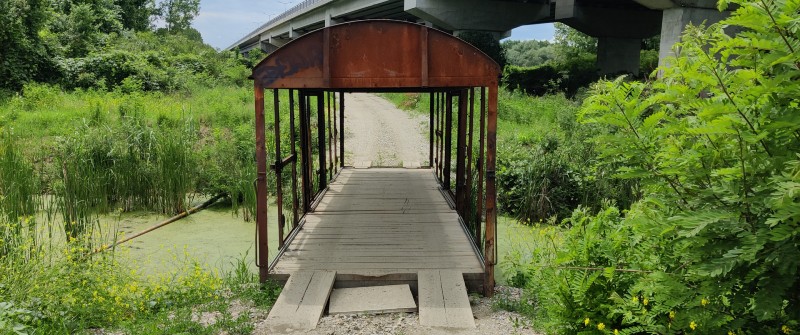
Pančevački Rit, a peripheral part of Belgrade, Serbia’s capital and biggest city, has seen major infrastructural development since World War I. This development has transformed large swathes of this wetland area, geologically shaped by the Danube, the Sava, and the Tamiš Rivers, into a mosaic of residential, industrial, commercial, and agricultural zones. This project tracks how different social actors (experts, government officials, activists, and inhabitants of Pančevački Rit) engage in practices of managing volumes in order to understand how these practices shape human-environment relations. To enable large-scale human activities in this context, people manage volumes by removing excess water and preventing it from returning, by stabilizing unstable terrain, and by clearing up the vertical space that swampy life forms would take up. Therefore, the natural and the built environment are in constant interplay in managing various volumes—from atmospheric precipitation to biomass in forests, from groundwater to wastewater, from river embankments to illegal landfills. The project employs social science methods, including ethnographic participant observation and interviews, archival work, and content analysis. It is informed by studies of wetlands, infrastructure, and volume from the fields of anthropology, geography, environmental studies, and science and technology studies. Its goal is to contribute to scientific understanding and potential solutions to urgent questions of urban environmental politics in the face of climate change.
Funding: Swiss National Science Foundation (Grant Nr. 234342)
Duration: 01.03.2026 – 29.02.2028